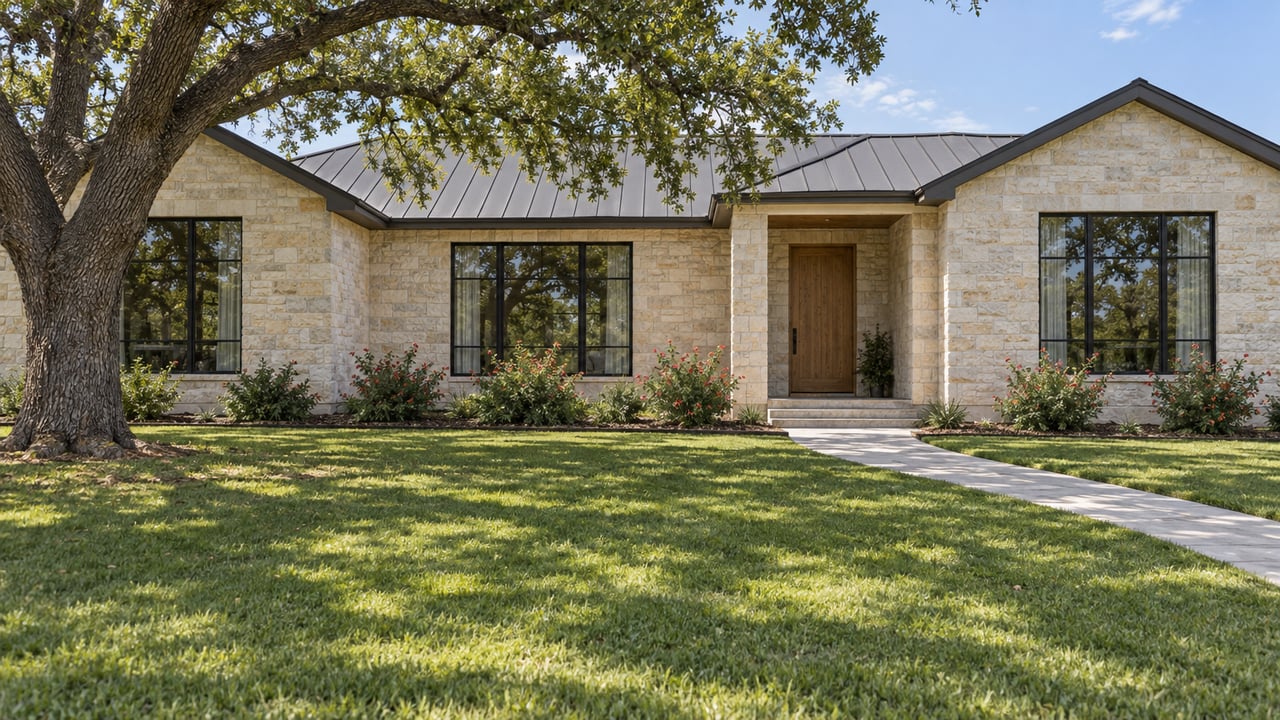
Austin Allows Three Homes Per Lot. A 1946 Plat in Highland Park West Allows One.
October 29, 2026
October 29, 2026
A buyer touring a Highland Park West home on Ridge Oak or Laurel Canyon can open the City of Austin's HOME page and read that most single-family lots zoned SF-1, SF-2 or SF-3 may now hold up to three units. The rule is real. The City adopted it on December 7, 2023. Then the title commitment arrives, and with it comes a recorded document from the 1940s that says something else.
According to the Highland Park West & Balcones Area Neighborhood Association, the deed restrictions for the Highland Park West subdivision limit the structures on a lot to one residence. Austin's code and that restriction run on separate tracks, and the City has no role in reconciling them. In this part of Central Austin, what a lot can hold depends on the recorded covenant and on whether neighbors choose to enforce it. The City's approval doesn't decide it.
The City of Austin states its position plainly. Its deed restrictions and development guidance says that if a building permit application complies with the Land Development Code, "staff must approve the application whether or not it conforms to a deed restriction." The same page says City zoning laws "do not affect the enforceability of deed restrictions," and that a restriction enforceable now "should remain enforceable, regardless of changes to City zoning regulations." When the City isn't a named party, enforcement is "a civil matter between the named parties."
So a project can hold a valid City permit and still violate a private covenant. HOME widened what the permit allows. It didn't change what the covenant forbids.
| City of Austin HOME rules | Highland Park West subdivision restriction | |
|---|---|---|
| Who wrote it | Austin City Council, December 2023 and May 2024 | The original subdivision, recorded in the 1940s |
| What it allows | Up to three units on most SF-1, SF-2 and SF-3 lots | One residence per lot, per HPWBANA |
| Who enforces it | City permit review | Parties named in the restriction, through civil court |
| Does a zoning change affect it | It is the zoning | No, per the City |
For duplex, two-unit and three-unit uses, HOME caps building coverage at 40% and impervious cover at 45%. Zoning, building and fire-separation requirements still apply.
In a recent post, HPWBANA reported that a lot in the Highland Park West subdivision had been set up as a condominium regime with two separate legal units, recorded in the Travis County official public records. The association described this as conflicting with the subdivision's one-residence restriction. The association wrote that "any owner in Highland Park West subdivision has the legal ability to enforce the restrictions," and invited owners who want to join an enforcement effort to get in touch. No outcome has been reported.
For a buyer, the episode shows how this works in practice. The two-unit regime was recorded anyway, and the pushback the association describes is coming from neighbors, not from the City. Whether a second unit survives on a covenant-restricted lot comes down to private enforcement, and that depends on whether the people holding the right decide to use it.
Texas law gives that enforcement real weight. Property Code §202.004 lets a court assess civil damages of up to $200 for each day a covenant violation continues. Under §5.006, a court must allow reasonable attorney's fees to a prevailing party who brought an action based on breach of a restrictive covenant.
Highland Park West is a common name for a cluster of separately platted subdivisions. HPWBANA says the Highland Park West subdivision itself takes in much of Crestway, from several houses west of Laurel Canyon running east, along with Ridge Oak, Laurel Canyon, Shadow Lane, Lakeview Drive, Parkcrest and Big Bend Dr.
The association's archive of plat notes and deed restrictions for its wider area, which it describes as a work in progress, lists separate documents for nearby subdivisions, each with its own recording history:
Two houses a few blocks apart can sit under different documents with different wording. The one-residence limit HPWBANA describes applies to the Highland Park West subdivision. A lot in Balcones Park Section 5 or Highland Village Section 4 has to be judged on its own recorded restriction. The City places that research on the buyer: "Before purchasing a property, buyers are responsible for checking zoning and deed restrictions."
For a buyer who wants a garage apartment, a second unit for a parent, or room to add one later, the restriction comes up at specific points in the standard contract. TREC's current One to Four Family Residential Contract (Resale), Form 20-19, took effect July 1, 2026. Here is the order of events under Form 20-19:
Step 3 is where the City rule and the private restriction meet. A covenant common to the subdivision is already a listed exception, so an ordinary objection to it is excluded. The blank line is the form's separate route, covering title matters that prohibit whatever use or activity is written in. How it applies to a particular lot and plan is a question for a Texas real estate attorney.
The seller's disclosure won't flag the restriction for you. TREC's current Seller's Disclosure Notice, Form 55-1, effective May 28, 2026, asks whether the seller knows of "notices of violations of deed restrictions or governmental ordinances." It doesn't ask whether restrictions exist. On a lot where nobody has ever been sent a violation notice, the form can come back clean while a one-residence covenant sits in the county records.
Austin's rule is clearly being used. As of the City's October 6, 2026 dashboard update, Austin had reviewed 931 HOME Phase 1 applications, approved 742, and approved 1,482 new units citywide. The City hasn't published those figures by neighborhood or ZIP code.
At the state level, the 2025 Legislature looked at accessory dwelling units several times and left private restrictions alone each time. SB 673 passed the Senate on April 10, 2025, and was last placed on the House General State Calendar on May 26, 2025. It didn't become law. Its House committee text said it would not supersede deed restrictions or HOA rules that limit or prohibit ADUs. HB 1779, HB 2480 and HB 878 also preserved private restrictions, and all three stalled in House committee. The small-lot law that did pass, SB 15, took effect September 1, 2025. It expressly does not prohibit enforcement of deed restrictions imposed by private agreement.
So in Highland Park West, the covenant layer is the same as it was before HOME. The City's rules allow more, and the private document still controls what an owner can safely build on a covenant-restricted lot.
If the City approves my permit, am I protected? The City says it must approve a code-compliant permit regardless of deed restrictions, and that it can't use a restriction to block development. Approval says nothing about whether a private party can enforce the covenant.
Does the HOME Phase 2 small-lot rule change this? Phase 2 allows a single small-lot unit on lots of at least 1,800 and under 5,750 square feet, and creating new lots generally requires subdivision. City staff linked low early Phase 2 uptake to how few parcels qualify by right and how complex subdivision review is. A private one-residence restriction sits on top of all of that.
Is every lot near Highland Park West restricted to one home? Not necessarily. Each subdivision and section has its own recorded document, so the specific lot's restriction is the one that matters.
This post is general information, not legal advice. Before you rely on a lot's potential, have a real estate attorney or title professional review the recorded restrictions for that parcel.
If a second unit, a guest house or future flexibility is part of why you're looking at Highland Park West, I'm glad to pull the title commitment early, get the restriction documents in front of you and your attorney during the title review, and match the home to the lot that actually fits your plans. Brande Draper is here when you're ready. Let's Connect.
Stay up to date on the latest real estate trends.

Get assistance in determining current property value, crafting a competitive offer, writing and negotiating a contract, and much more. Contact me today.