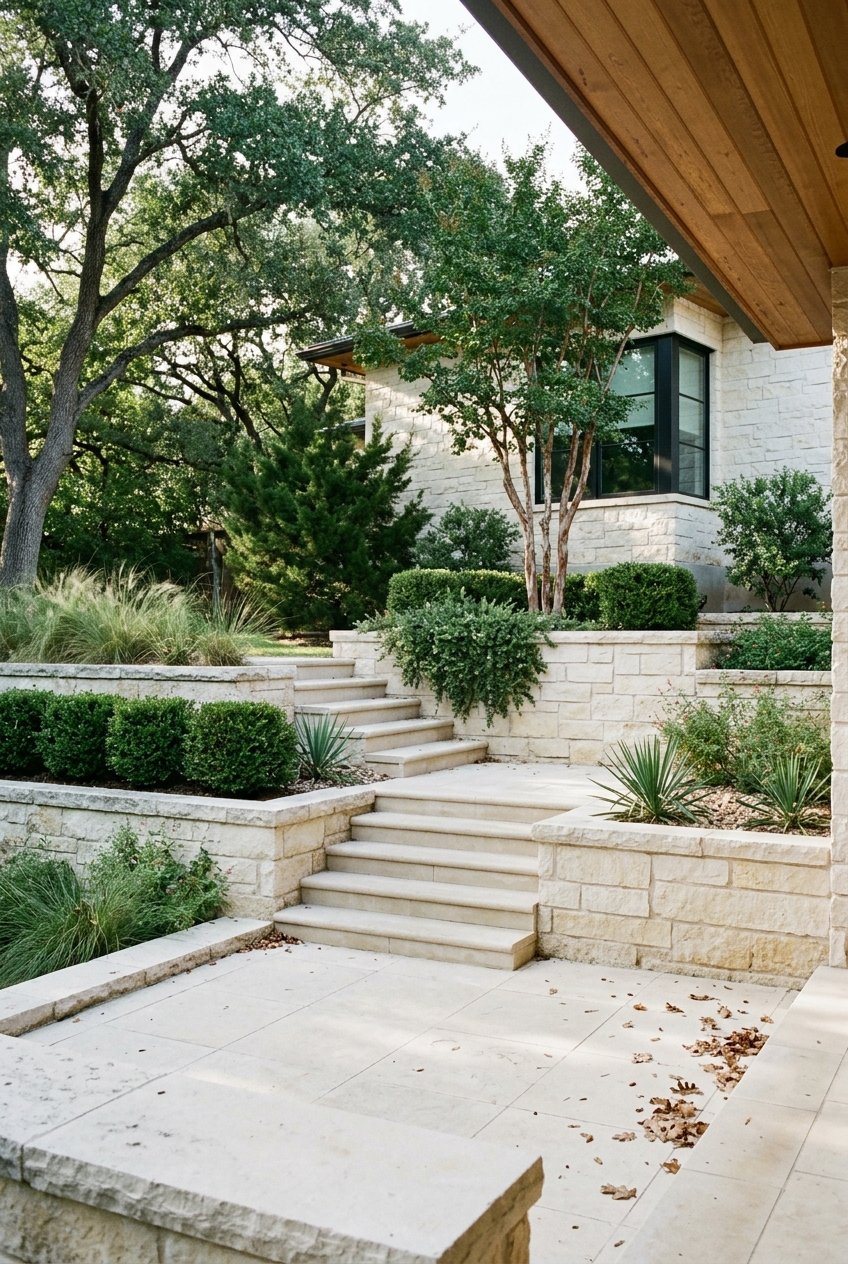
Buying Near Mount Bonnell: Weighing View, Privacy, And Price
June 18, 2026
June 18, 2026
If you are thinking about buying near Mount Bonnell, the view can be the first thing that grabs you and the last thing you stop thinking about. That is part of the appeal, but it can also make it harder to judge what really matters once you move past the wow factor. If you want to weigh view, privacy, and price with more confidence, this guide will help you focus on the details that shape value near Mount Bonnell. Let’s dive in.
Mount Bonnell is one of Austin’s most recognizable view settings. The City of Austin describes it as a 784-foot promontory along Lake Austin with panoramic views of the lake, downtown, and the western hills. That kind of setting naturally creates a different pricing dynamic than you would see in a more level, less view-driven area.
In spring 2026, broad 78731 market data put the median sale price around $1.0 million. Zillow reported $1,020,592 in April 2026, and Redfin reported $1,049,688 for the three months ending May 2026. By comparison, the broader Austin-Round Rock-San Marcos metro median residential home price was $390,000 in May 2026, which shows how far this area can sit above the metro baseline.
That gap does not mean every home near Mount Bonnell carries the same premium. Research summarized by the Appraisal Institute and the Journal of Real Estate Finance and Economics indicates that higher-quality views often add value, but the premium depends on view quality and market context. In practical terms, a true view property should be judged by more than ZIP code alone.
Not all views perform the same way in the market. A strong view usually needs to be visible and usable from the spaces where you actually spend time, such as the main living room, kitchen, dining area, or primary suite. A distant glimpse from one upstairs window is usually not the same value story.
When you compare homes near Mount Bonnell, it helps to look at several factors together:
This is where buyers can avoid overpaying. Two homes may sit close to each other on a map, yet one may have a more protected and functional view while the other has a weaker sightline or less usable outdoor space. The price difference may be justified, but only if the view is genuinely better in day-to-day living.
The same elevation that creates sweeping views can also reduce privacy. Higher-positioned homes may feel more exposed to neighboring sightlines, while lower lots may feel more tucked away but offer less panorama. That tradeoff is one of the most important buying decisions in this area.
If privacy matters to you, pay close attention to how the house sits on the lot. Tree cover, setbacks, window placement, and the position of the main living level can all change how private a home feels. Sometimes a home with a slightly less dramatic view can offer a more comfortable daily living experience.
Outdoor living plays a role here too. On sloped lots, a well-placed terrace, deck, or patio can be more useful than a larger yard that is difficult to access or enjoy. Near Mount Bonnell, usable outdoor space often matters just as much as total lot size.
Near Mount Bonnell, the site itself can shape value in a big way. The area sits on the Balcones Escarpment and Mount Bonnell fault zone, where Austin’s geotechnical baseline report describes faulted limestone, marl, shale, and mixed near-surface soils that can include clay, clayey sands, sand and gravel, and cobbles. For you as a buyer, that means slope, drainage, retaining walls, and lot placement deserve close attention.
A beautiful house on a challenging lot is still a challenging lot. If runoff moves toward the home, if retaining walls show stress, or if the main outdoor areas are hard to use, those issues can affect both enjoyment and long-term upkeep. The address may be prestigious, but the site conditions still matter.
Landscaping can add privacy and soften the setting, but it should be viewed carefully. TREC identifies tree roots or large plants near the foundation as factors that can contribute to differential movement. Mature trees can be a real asset, but they are also part of the maintenance picture.
Buyers near Mount Bonnell may encounter a mix of renovated older homes, period architecture, and newer custom work. In the broader West Austin context, the City of Austin notes that some nearby areas include many older homes and support compatible infill on existing small lots. That mix can create exciting options, but it also means renovation potential varies by address.
If you are drawn to a home because of what it could become, take a measured approach. A property’s slope, site engineering needs, and any design or historic review rules can affect how easy it is to make exterior changes later. This is especially important if you are buying for both lifestyle and long-term value.
If the property is in a local historic district, the City of Austin says changes to contributing properties and new construction must go through historic review. That does not automatically make a property a poor fit. It simply means you should understand the review process before you count on immediate exterior changes.
A standard showing can tell you if a home feels right. Due diligence tells you whether it is likely to perform the way you expect. Near Mount Bonnell, inspections should focus not just on the house, but on how the house interacts with the site.
TREC requires Texas inspectors to give a written opinion on foundation performance and report visible signs of adverse performance. That includes things like sloping floors, cracks or separations, and doors that do not latch squarely. Inspectors also must report deficiencies in grade around the foundation, gutters and downspouts, crawl-space drainage, and retaining walls when related to foundation performance.
At the same time, there are limits to what a standard inspection covers. TREC does not require inspectors to determine area hydrology, inspect buried drainage systems, or evaluate the efficiency of underground or surface drainage systems. On a hillside or view lot, that distinction matters.
Before you move forward on a Mount Bonnell-area purchase, make sure you are looking closely at:
This is where a calm, fact-based buying process can protect you. A great view is valuable, but only if the house and lot support it well over time.
When a property has a memorable view, it is easy to let emotion set the number in your head. A better approach is to separate the parts of the home that are rare from the parts that are replaceable. Finishes can often be updated. Elevation, orientation, and lot position usually cannot.
That is why side-by-side comparisons matter so much here. A home with a protected, usable view from the main living areas may deserve a stronger price than a nearby home with a weaker sightline, even if the second house has newer finishes. On the other hand, a home with a premium asking price should be able to justify that number through both view quality and overall livability.
You also want to ask whether the sightline feels durable. Future additions, tree growth, and the way the lot sits relative to surrounding homes can all influence how stable that view may be. In a view market, what you are buying is not just square footage. You are also buying the experience the property can deliver every day.
If you are serious about buying near Mount Bonnell, it helps to think in priorities instead of perfection. Ask yourself whether your top goal is the strongest possible view, the most privacy, the easiest outdoor living, the best renovation potential, or the best value within your budget. Most buyers can get two or three of those strengths, but rarely all of them at once.
That is why this area benefits from a strategic, grounded approach. You want to evaluate the home, the lot, and the long-term tradeoffs together. When you do, you are much more likely to choose a property that feels good on day one and still makes sense years from now.
If you want a thoughtful, data-driven look at homes near Mount Bonnell and how to weigh view, privacy, and price in real terms, Brande Draper can help you navigate the details with clarity and confidence.
Stay up to date on the latest real estate trends.
Get assistance in determining current property value, crafting a competitive offer, writing and negotiating a contract, and much more. Contact me today.