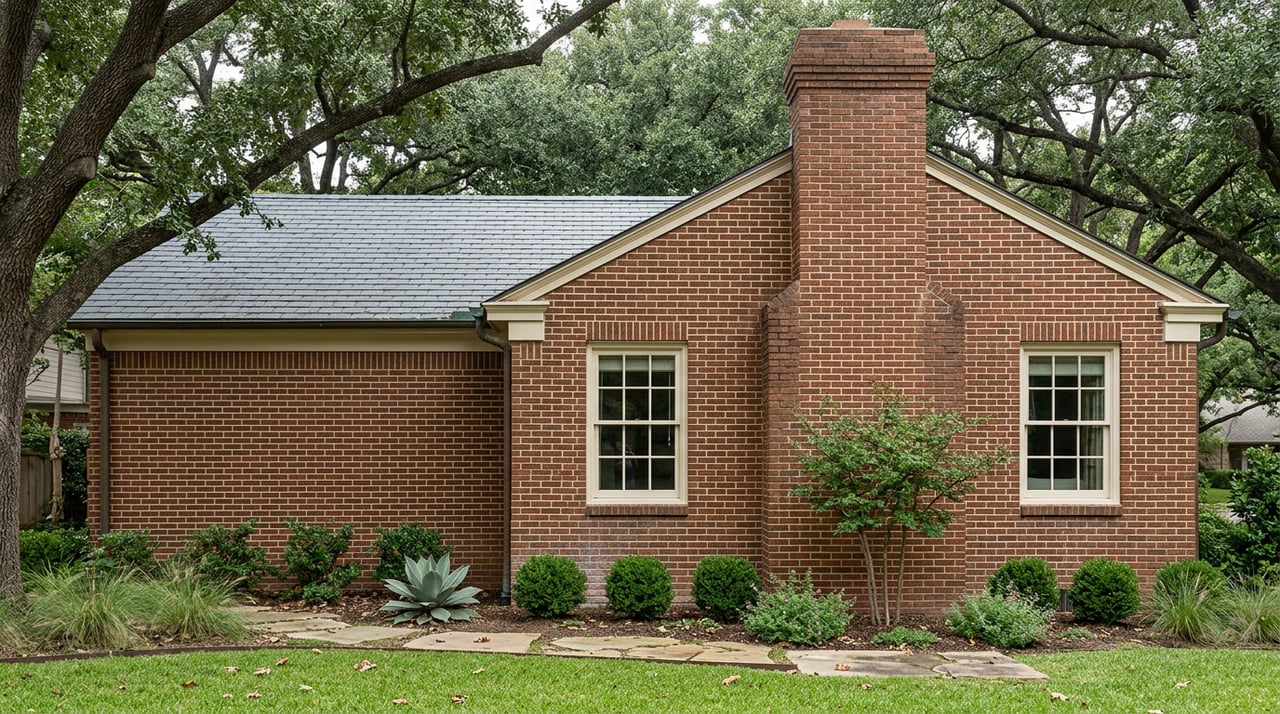
What to Know About Pemberton Heights Renovation Rules
August 27, 2026
August 27, 2026
In March 2026, a developer in East Austin thought a demolition permit was a formality. Haidar Properties had told Austin's Historic Landmark Commission in December 2024 that its plan for a building on East Cesar Chavez Street, built as early as 1887 and most recently home to the restaurant Cenote, would preserve as much of the structure as possible while converting it into a location for the California coffee chain Urth Caffé. Commissioners signed off on a plan to keep 2,622 square feet of the original building and remodel 959 square feet of a second structure on the site.
By the time anyone looked closely, one wall was left standing.
The city issued stop-work orders. At a follow-up hearing in April, commission chair Ben Heimsath told the development team their explanation did not add up, saying plainly that "a historic home was destroyed when it shouldn't have been." The building was never even a designated local landmark. It had only been flagged as a high priority in a city survey. That distinction turned out not to matter much once the demolition permit process was in motion.
That case is in East Austin, not Pemberton Heights. But it is the clearest recent illustration of a rule that catches Pemberton Heights buyers and sellers off guard constantly: the trigger for historic review in Austin is not always the landmark plaque. Sometimes it is just the age of the building and the permit you filed.
Pemberton Heights sits inside the Old West Austin National Register Historic District, added to the National Register in 2003. Most owners hear "National Register historic district" and assume it means a review board signs off on their paint color, their windows, and their addition. For the vast majority of the neighborhood's roughly 613 homes, that is not how it works.
Preservation Austin, the city's nonprofit preservation advocate, describes National Register listing as primarily honorific. No zoning changes with it, and historic review under that designation alone is advisory. Under federal law, National Register status places no restrictions on what a private, non-federally funded owner can do with a property, including demolishing it. If you own an ordinary Pemberton Heights home that isn't individually landmarked, you can generally remodel a kitchen, replace a roof, or build an addition without a Certificate of Appropriateness, because the National Register overlay by itself doesn't require one.
The binding version of historic protection in Austin is a separate, narrower track: individual Historic Landmark designation or Historic Landmark Combining District zoning. Neighborhood materials put the number of individually recognized historic landmarks in Pemberton Heights above 40. A city planning document counts more than 25 properties carrying the more binding combining district zoning. Those are the addresses where a Certificate of Appropriateness is required before touching an exterior feature, and where the Historic Landmark Commission reviews the design itself, not just the demolition.
That leaves most of the neighborhood, homes with genuine 1920s and 1930s character but no individual designation, in a middle zone: free to renovate, but not free of every hurdle if the plan is to tear the house down.
Here is the part that surprises people planning a full teardown-rebuild. The Historic Landmark Commission does not only review changes at individually designated properties. According to the city's own preservation office, the commission reviews demolition and relocation permits for buildings that have crossed roughly the half-century mark, regardless of whether those buildings carry individual landmark status, and regardless of whether they sit in a locally zoned historic district or a National Register district like Old West Austin.
Most homes in Pemberton Heights were built between the late 1920s and the early 1940s. Every one of them clears that age threshold by decades. So a non-landmarked, non-designated house in Pemberton Heights can be renovated without a Certificate of Appropriateness, but a full demolition of that same house still lands in front of the same commission that reviews the neighborhood's most protected estates.
| Scope of work | Ordinary Pemberton Heights home (no individual landmark or combining district zoning) | Individually landmarked or Historic Landmark Combining District property |
|---|---|---|
| Kitchen remodel, addition, re-roof | No Certificate of Appropriateness required | Certificate of Appropriateness required |
| Full demolition or relocation | Reviewed by the Historic Landmark Commission because of the building's age | Certificate of Appropriateness plus commission review required |
Real estate agents working the neighborhood have said plainly that remodeling and complete teardown-and-rebuild projects are both common in Pemberton Heights. The demolition-review requirement is not a wall that stops teardowns from happening. It is a procedural checkpoint that adds time and paperwork, and one that a buyer or investor needs to plan around rather than discover midway through a project.
The East Cesar Chavez case shows what happens when that checkpoint gets treated as optional. The developer's own architect, Ingrid Gonzalez Featherston, later told commissioners that asbestos remediation and the extent of the damage forced decisions in the field that went beyond the approved scope. Commissioner Kevin Koch wasn't convinced: "I'm not buying it." The result was two stop-work orders, a public commission hearing, and a construction site that sat idle while the city and the owner sorted out what permits would be needed to move forward at all.
If you are buying or selling in Pemberton Heights and want to know whether a property faces real design constraints, the answer is almost always tied to a specific address rather than the neighborhood as a whole. The individually landmarked properties include some of the neighborhood's most recognized names: the Fisher-Gideon House, better known as Pemberton Castle, which started as a water tower before becoming a sales office and then a private home, along with estate-scale properties like Splitrock, the Reed Estate, and the Bohn House. Those are the addresses where exterior work goes through the full Certificate of Appropriateness process before a permit is issued.
Everywhere else in the neighborhood, the National Register overlay is mostly background. It shapes the character of the streetscape and gives the area its identity, but it is not the thing standing between an owner and a renovation permit.
As of this month, Pemberton Heights has only a handful of homes actively listed, with asking prices spanning roughly $1.295 million to just under $8 million. Recent trailing sales data has put the neighborhood's median sale price near $1.96 million, with days on market running noticeably longer than the citywide average. In a market with this few comparable sales, a project that stalls in permit review doesn't just cost the owner time. It removes one of the only recent data points other buyers and appraisers have to work with.
That is the practical reason this distinction matters right now more than it might in a faster-moving market. A buyer who assumes a non-landmarked 1930s cottage can be torn down on the same timeline as a permit for a new-construction lot in a subdivision without historic overlay is planning around the wrong rulebook. A seller marketing a property's teardown potential should be prepared to tell a buyer exactly what review process applies, because the answer shapes financing timelines, construction loan terms, and how long a buyer needs to carry the property before breaking ground.
Does National Register status in Pemberton Heights stop me from renovating my home? No. For homes without individual landmark or Historic Landmark Combining District zoning, National Register status alone does not require a Certificate of Appropriateness for ordinary renovation work.
Does every teardown in Pemberton Heights need Historic Landmark Commission approval? Because most homes in the neighborhood are well past the age threshold the city uses to trigger demolition review, most full demolitions will go through that commission process, regardless of individual landmark status.
How do I find out if a specific Pemberton Heights address is individually landmarked? The City of Austin's Historic Property Viewer shows whether a property carries local landmark designation or combining district zoning, separate from its inclusion in the Old West Austin National Register Historic District.
Renovation and teardown decisions in a neighborhood this old rarely come down to a single line item. They come down to knowing which rules actually apply to the address in front of you, and building a timeline that accounts for the ones that do. Brande Draper has walked Austin buyers and sellers through nine major renovations of her own, and works through exactly this kind of due diligence with clients evaluating character homes in Pemberton Heights. If you're weighing a purchase, a sale, or a renovation plan in the neighborhood, let's connect.
Stay up to date on the latest real estate trends.

Get assistance in determining current property value, crafting a competitive offer, writing and negotiating a contract, and much more. Contact me today.