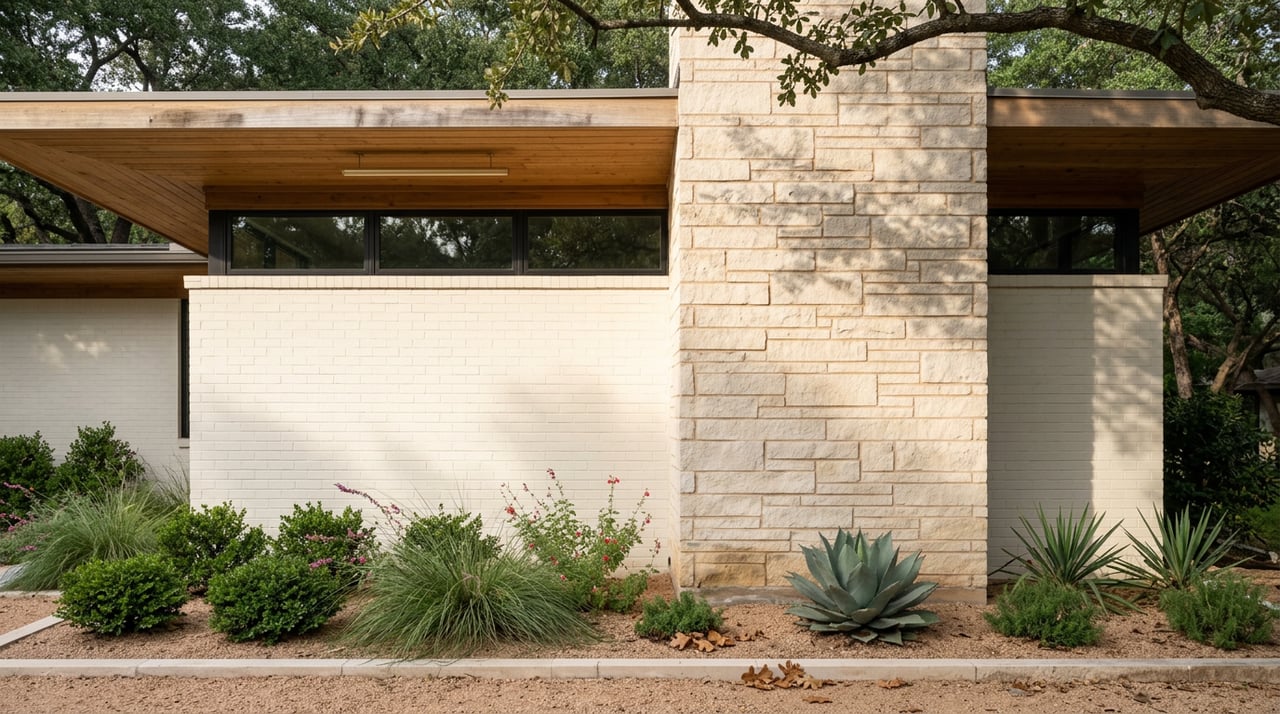
What Two Similar Highland Park West Homes Can Trade $500K Apart On
August 6, 2026
August 6, 2026
The Highland Park West median is easy to find. Depending on which portal a buyer opens first, it lands somewhere between $1.4M and $1.9M, with the most recent Austin MLS pull showing about $1.87M and 15 closed sales in the trailing twelve months. That number is accurate. It is also close to useless as a pricing anchor for a specific street, because the spread inside 78731 is unusually wide for a neighborhood this small.
Two mid-century ranches of similar age, square footage, and finish level can close five hundred thousand dollars apart in the same quarter. The reason is not condition. It is a set of block-level frictions that only surface once a buyer is inside a house with an inspector.
Highland Park West is a fully built-out, roughly one-square-mile grid between Northwest Hills and Tarrytown along the Balcones escarpment. The Austin MLS shows a 96% sale-to-list ratio, about 2.4 months of supply, an average of 101 days on market, and roughly $605 per square foot across those fifteen trailing sales, current through May 2026. In the same window, Redfin recorded a smaller sample at a $1.4M median, up 40.8% year over year, and Realty Austin listed the median list price at $1.5M with 75 days on market.
Read together, those numbers say something specific. Sample sizes are small. Sale-to-list is strong, but time on market is long by Austin standards. Homes are not sitting because demand is soft. They are sitting because sellers keep pricing to the neighborhood median while buyers are underwriting to the block.
The pricing spread inside Highland Park West tracks four variables that a portal cannot show and a comp sheet averages away:
Each of these gets underwritten during the option period. None of them is captured in the median.
Highland Park West sits just west of MoPac at RM 2222. The neighborhood benefits from that access. A seven-minute drive to downtown is one of the reasons the median holds where it does. It also means noise exposure changes materially over the course of a few blocks.
The March 2026 draft environmental assessment for the CTRMA's MoPac South project, covered by KUT, is focused south of the river. The relevance to a Highland Park West buyer is indirect but real. The CTRMA is documenting the noise-wall methodology it uses on Loop 1 corridors, and the same framework governs why some 78731 streets have never received sound mitigation and probably will not. A buyer touring on a Sunday morning is hearing a different MoPac than a buyer touring at 5:30 on a Wednesday. The delta between an interior street and a MoPac-adjacent one shows up in appraisals as a livability discount rather than a price-per-foot discount, which is why it can be missed on a comp sheet.
The neighborhood's eastern and northern edges brush against Bright Leaf Preserve, the 216-acre private conservation area assembled by Georgia Lucas in 34 separate real estate transactions and now managed by the Wildlife Conservation division of Austin Water. Public access is restricted by the terms of her will.
Hiking at Bright Leaf is by guided hike only. The Friends of Bright Leaf organize public hikes on the second Saturday and second Sunday of each month at 9 a.m., with extra hikes in April and October. No dogs, no bikes, no fishing, no camping.
For a buyer, the practical result is that a lot backing to the preserve is a permanent no-rear-neighbor lot with a heritage tree canopy that new construction cannot replicate, plus a rear boundary the public is contractually prevented from crossing. That combination is scarce in central Austin. It is also priced accordingly. Recent listing language on Balcones Drive and around the preserve edge leans on the "backing to the 200-acre Bright Leaf Preserve" line as the primary value proposition, ahead of finishes and floor plan. When a comp sheet averages a preserve-backing sale against an interior-block sale of the same size and vintage, it pulls the median toward a number neither house would actually trade at.
Highland Park West sits along the Balcones escarpment. Elevation changes are real and the topography is why the neighborhood has hill country views at all. On a given block, the "high side" of the street typically gets the view, better drainage, and, in some cases, a shorter driveway grade. The low side gets the runoff.
The Balcones fault zone that gives the neighborhood its topography also gives it foundation risk. Expansive clay soils over shifting bedrock are the reason so many 1950s and 1960s ranches in 78731 have had pier-and-beam supplements added over the decades. It is common for a Highland Park West option period to produce a structural engineer's letter with a scope in the $8,000 to $40,000 range. That scope is negotiated, not absorbed, and it is one of the most consistent reasons a Highland Park West deal closes below list even when the sale-to-list ratio for the neighborhood looks strong on paper.
None of this makes the neighborhood a bad buy. It makes it a neighborhood where the inspection matters more than the appraisal.
Buyers comparing 78731 usually put Highland Park West next to Northwest Hills. The two share a ZIP code and a school district but not a school path or a lot pattern.
| Variable | Highland Park West | Northwest Hills |
|---|---|---|
| Elementary path | Highland Park | Doss |
| Middle / High | Lamar / McCallum | Murchison / Anderson |
| Typical lot | 7,000 to 10,000 sf | Half acre and up |
| Grid | Walkable | Curvilinear, hillier |
| Median sold, trailing 12 mo | ~$1.87M | Generally higher |
The gap is the point. Highland Park West trades at a discount to Northwest Hills for lot size, but at a premium for walkability and the Highland Park Elementary path. A buyer who values one over the other is not comparing two versions of the same neighborhood. They are choosing between two different products that share a ZIP code.
Inventory is thin but not tight. Three active listings against 15 trailing sales is a slow-moving market where sellers who priced to the headline median in Q1 are the ones now sitting at 90-plus days. That is where a prepared buyer finds room.
Three practical implications for anyone writing an offer in Highland Park West this summer:
Is the Highland Park West median rising or falling in 2026? The direction depends on which dataset a buyer uses. Redfin's March 2026 read showed a +40.8% year-over-year median, driven by a small sample skewed toward higher-end closings. The ACTRIS MLS twelve-month pull is closer to flat around $1.87M. Both are correct. Neither tells a specific street's story.
Does backing to Bright Leaf Preserve limit what an owner can do to a lot? The preserve is private conservation land held by the Austin Community Foundation and managed by Austin Water's Wildlife Conservation division. It does not impose deed restrictions on adjacent private lots. It does mean the rear boundary is stable in a way that a neighboring residential lot is not.
Why do Highland Park West homes take longer to sell than the Austin average? The Austin metro median days on market is around 62. Highland Park West runs closer to 100. The gap is not weak demand. It is a mismatch between sellers pricing to the neighborhood median and buyers pricing to a specific block, plus longer inspection cycles on escarpment homes.
If you are trying to figure out what a specific block in Highland Park West actually trades at, and what the last three inspection reports on that street turned up, that is the conversation to have before you write an offer. Brande Draper works this corridor at the block level and is happy to walk through it with you.
Let's Connect.
Stay up to date on the latest real estate trends.

Get assistance in determining current property value, crafting a competitive offer, writing and negotiating a contract, and much more. Contact me today.